
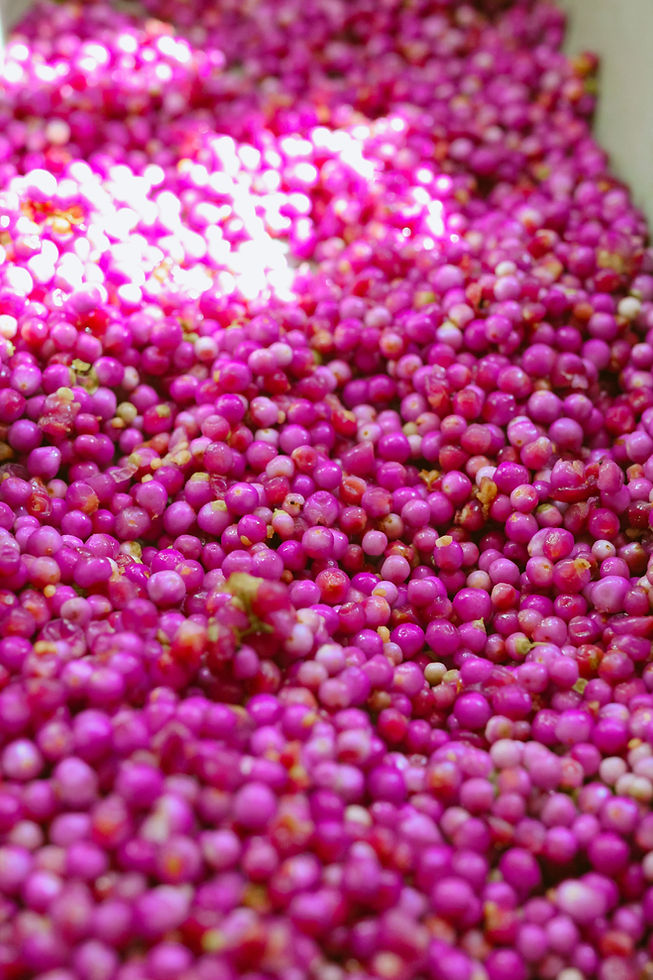
How to Make Beautyberry Jelly

By: Kassandra Givler, October 2026
The beautyberry (Callicarpa americana) goes by many names: sourbush, sourberry, bunchberry, French mulberry, there are probably more that I don’t even know about. Its beauty is nothing to compare it to; even its invasive look alikes can’t compare. It’s a wonder why some buy nonnatives, when the stuff we actually have at home is better.

The American beautyberry’s vibrant purple is a sight to see. Nearing the end of its show stopping season it is a reminder that fall is near. Many may wonder if the berry is just a looker and nothing more. Safe to say, this cutie has a lot more depth. Not only does it have high wildlife value, it is also edible to us! This is where my stomach once again takes me.
I have been curious for some time about making jelly. The thought of making beautyberry jelly interested me. I would like to make a disclaimer before I continue and profess I am not a professional of any kind. I will make mistakes and if you are a professional jelly maker many apologies. Look away! If you know nothing like me, welcome and follow my recipe with caution. I’m nothing more than a humble internet stranger who is always dreaming, always curious, and most importantly, always hungry.
My Search
My search for the berries ended VERY quickly. I went to my friendly neighborhood native lovers group (Central Rappahannock Chapter of the VNPS Facebook group) and asked if anyone had some. I got many pings, but Jackie came first with the goodies. I may say I greatly appreciate everyone who commented and reached out to help! Jackie and I met up at a local Costco- not only did I get my berries, but I also was able to snag a chicken bake. My son, Elliott happily ate pizza along side our precious berry cargo.

Upon researching about jelly, it was pretty straightforward. I bought some gadgets that I will discuss later, but it was the history that once again perked my interests. Unlike my deep dive into the world of pawpaws, this information was a little tougher to find. There were very few entries that I saw that gave the full picture and even still I believe I have missed a lot more. It was until I fell into a blog by a South Carolina rare plant nursery named, Woodlanders. I reached out to them and they wrote back quickly about where I can locate more information.
The History
Mark Catesby was an English naturalist who visited Williamsburg to visit a sister in which he later embarked a journey through many colonies. He collected many souvenirs and illustrations of the fauna and flora of the colonies and brought them to England. He also sent American beautyberry specimens back to England, this inspired many to place them into their English gardens. Many peers and botanists alike became intrigued and sponsored him to document his travels in America (Virginia Museum of History & Culture). This sponsorship would later create Natural History of Carolina, Florida, and the Bahama Islands. His work later will inspire many naturalists, adventures, explorers; such as William Bartram (Woodlanders).
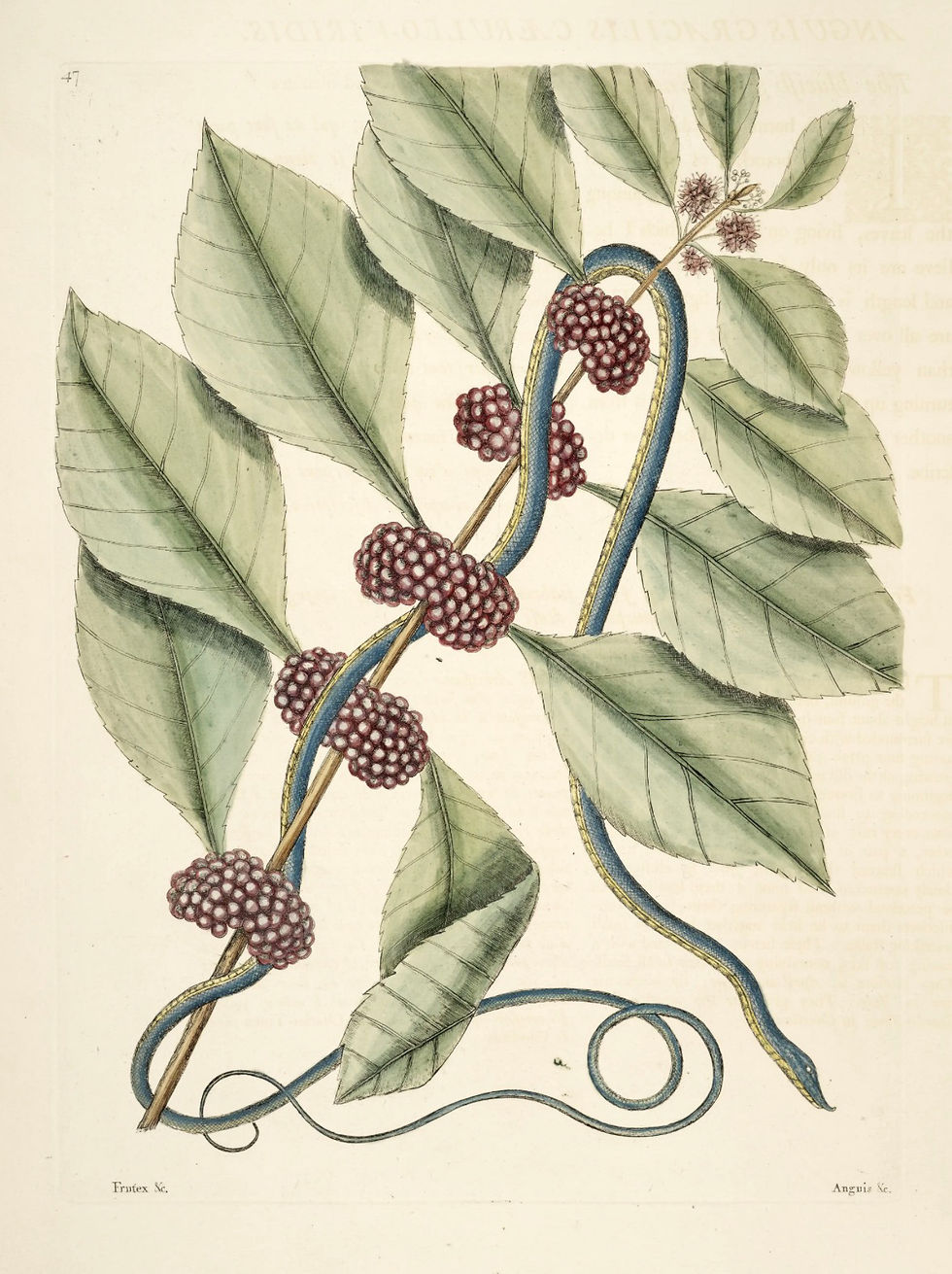
American beautyberry has held a hearts of many, including Thomas Jefferson. “While Jefferson resided in Paris during the 1780s, his close friend Madame de Tessé requested that he arrange for plants to be sent for her estate at Chaville. Jefferson, in turn, wrote his friend John Bannister, Jr., for this plant (Monticello).”


Beautyberry is not just an ornamental plant. It has been used by indigenous people for its roots, leaves, and berries for various medicines. Leaves and other part of the plants are boiled to use in sweat baths to treat malarial fevers and rheumatism (Maeckle). The boiled roots were also used to treat dizziness stomach aches, and urine retention (A Clerodane Diterpene from Callicarpa americana Resensitizes Methicillin-Resistant Staphylococcus aureus to ß-Lactam Antibiotics) . Bark from the stems and roots were made to soothe an itchy skin (Maekle). According to oral history, people who lived in Northern Mississippi would stop American. Beautyberry is under the harness mules to keep bugs away. This made people rub these leaves onto their clothes and onto their skin to deter mosquitoes and biting insects (Maeckle). It has long been suspected that Beautyberry leaves were just as effective, if not more than DEET. According to Monica Maeckle’s book, Plants with a Purpose: 25 Ecosystem Multitaskers, a Mississippi farmer named John Rives Crumpton told his grandson Charles T. Bryson about these stories. Bryson then decided to put these “tall tales” to a test. Bryson, also a botanist began to study this for the Southern Weed science research unit of the agricultural Research Service. In 2006, he and others determined that American beautyberry leaves contained callcarpenal. Their studies have shown that it is more effective than DEET. Maekle also discusses how they also have been known to repel fire ants. There’s more research in her piece where she discusses that the leaves stalls the growth of bacteria that causes acne. And in 2020, scientists discovered that beautyberry’s compounds, contain Clerodane diterpenes, this fights against antibiotic resistance staph bacteria. In an NLM article, A Clerodane Diterpene from Callicarpa americanaResensitizes Methicillin-Resistant Staphylococcus aureus to ß-Lactam Antibiotics, they found there is a possibility in future use of Beautyberry however, there needs to be more studies done. It always excites me when something that has been said and done by tribes for like FOREVER gets studied by science to just say they’re right.

The beautyberry is many things: it’s a healer, it’s a bug repeller, it’s sour, it’s delicious, it’s simply beautiful. Beautyberry is luckily very native to us and for our wildlife. “The fruit is high in moisture content and is animportant food source for more than forty species of songbirds including the American Robin, Brown Thrasher, Purple Finch, and Eastern Towhee. The drupes
or clusters are eaten by armadillo, foxes, opossum, raccoon and squirrels. White tailed deer consume the fruit in the fall after leaf drop. They also browse the leaves in summer when highly preferred foods are not available. Protein content of the leaves ranges from 18 percent in
spring to 8 percent in fall.( USDA NRCS NRCS East Texas Plant Material Center).” If you can do yourself a favor and for everything around you, maybe grab the shrub and plant it in your garden already! Remember VA Atlas says that it is located in “various mesic to dry upland forests, maritime forests, successional pine forests, forest edges, and disturbed habitats. Frequent in the s. and c. Coastal Plain (common in some localities), n. to Accomack, Northumberland, and Richmond counties.” It is distributed in VA, but not exactly native to any of our chapter’s counties and city besides Essex. Do note, Beautyberry has thrived outside those areas, but plant with this knowledge in mind!
The Recipe
Here is a video of my rise and fall, I fixed it and the recipe is below!
Gadgets I used:
A tall pot, I called it our seafood boil pot (we sadly don’t do it that often)
A rack to fit at the bottom of your pot (I used an air fryer metal rack it somehow fit perfectly)
12 4oz jars they need to be two piece lids (I just got the 4oz mason jars and that’s what it is)
Spatulas
Tongs
Timer
Mesh sieve
Heat-safe bowl
Cheesecloth
Maybe a prayer
Gadgets real jelly makers may recommend:
A jarlifter
A canning funnel
A lid caddy
A magnetic lid wand
A canning rack with handles
(I have no clue what this means BUT Spruce Eats recommended these).
Recipe:
5 cups of Beautyberry
6 cups of water
2.5 tblspoon of lemon juice
3 cups of sugar
6 tblspn of pectin

I separated and cleaned the berries throughly and inspected each cluster then slowly separated them from one another. You may find a little guy in there that’s normal just take your little bug friend outside for some sunshine. I took out the unripe berries which was time consuming, but that’s ok
Pour your water into a pot and place your washed berries in it as well. Watch it boil. Once it boils lower it to a simmer. Cover it for 20-30 minutes. It should be mushy and grey.
Grab your sieve and put it on top of a heat-safe bowl. Line the mesh sieve with a cheesecloth. Pour your pot into the bowl. Slowly squeeze the cheesecloth and push the berries into the sieve to ensure all liquids are drained into the bowl.
Once drained, pour the liquid back into a pot and let it begin to boil. Add your lemon juice. Once it starts bubbling slowly add your sugar. Mix it thoroughly and wait for it to get into a roaring bubble. Once it is boiling add your pectin and begin to mix. It should quickly thicken. Mix it until you see all contents are dissolved.
NOTE: You may add half a cup less of sugar, but everyone, but my husband felt the sweetness was just right. So maybe he’s wrong lol.
Pour the liquid into each jar. Fill it to the first line. If you feel that you do not want to can it you may stop here. Please note the jelly is only good for 2 weeks max.

Canning
While you’re jelly heats fill your high enough where the line meet to the bottom lid line of the mason jar or an inch of space from the top.
Keep your water warm but not to a boil.
Place each jar onto the rack. Make sure there is 1/2 inch of space. Turn up the heat. Start your timer once it begins to finally boil
Boil it for ten minutes.
NOTE: If it’s boil too vigorously lower the temp.
NOTE: While the ten minutes are going set up a rack and towel to put your mason jars on. Have your tongs ready!
Once the ten minutes are up, let it sit for five minutes. After the five minutes place it on your toweled rack with 1 inch space between them. Leave them be for 12-14 hrs.
NOTE: you may hear pinging sounds, but that’s normal! Those are sounds of science doing its job!
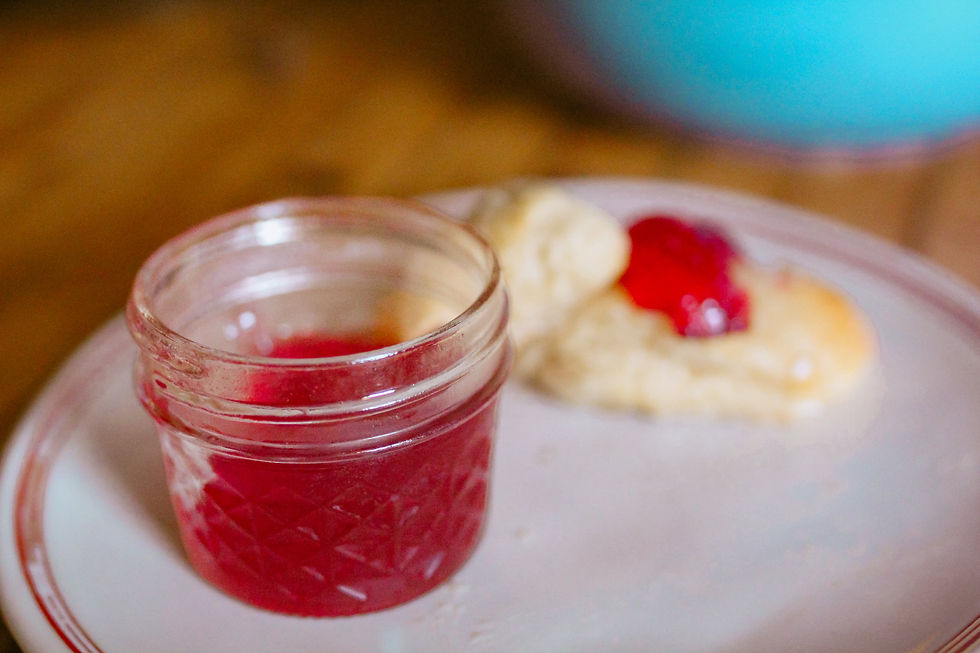
I made vanilla scones to pair with them! You can find the recipe here: https://www.recipegirl.com/copycat-starbucks-vanilla-bean-scones/.
The only modification I made was whole milk! It was less dense and had still a good crumb.
Enjoy!
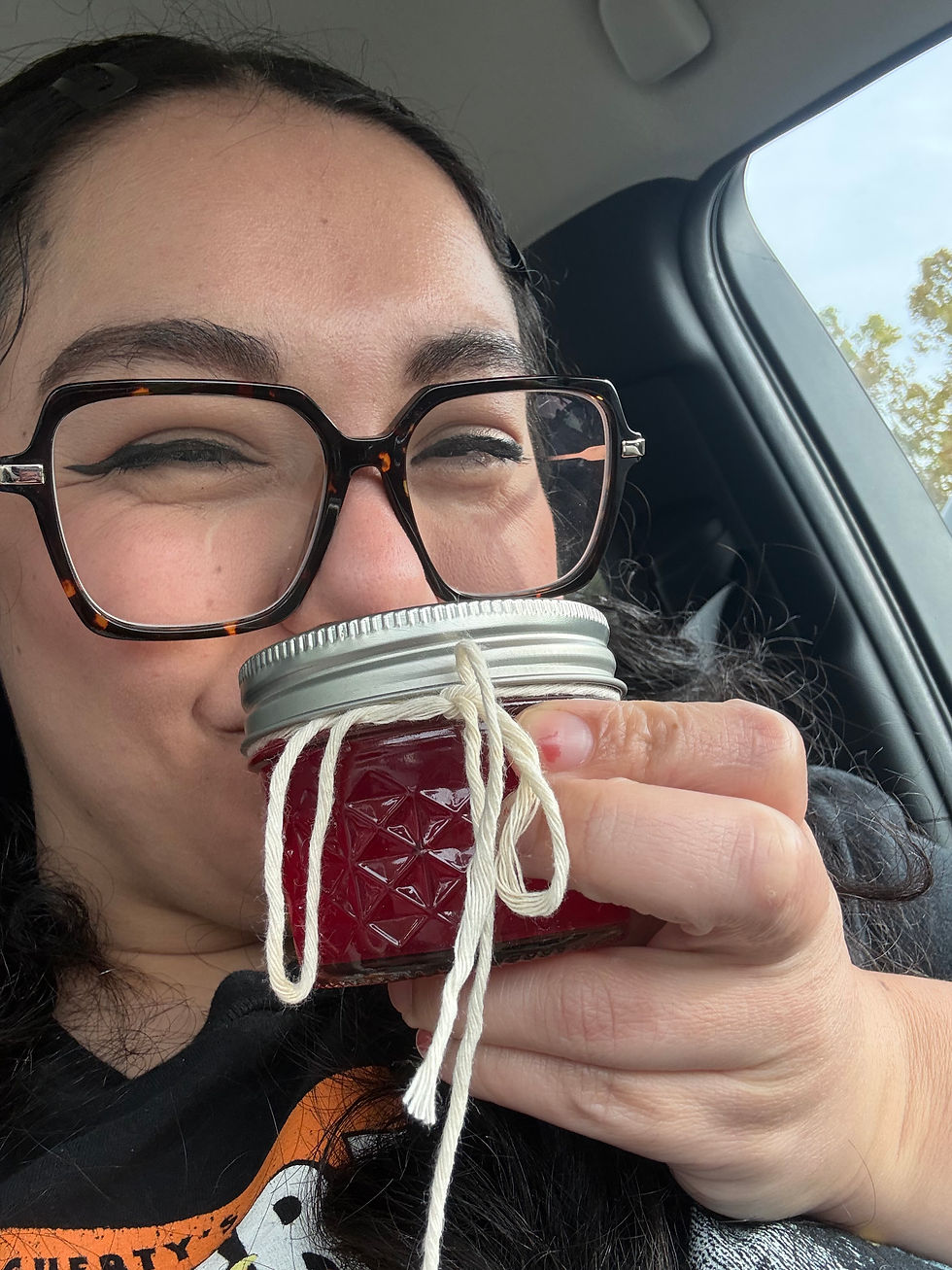
Works cited:
Maekle, Monika. Plants with Purpose. 2025, pp. 22–23.


Comments